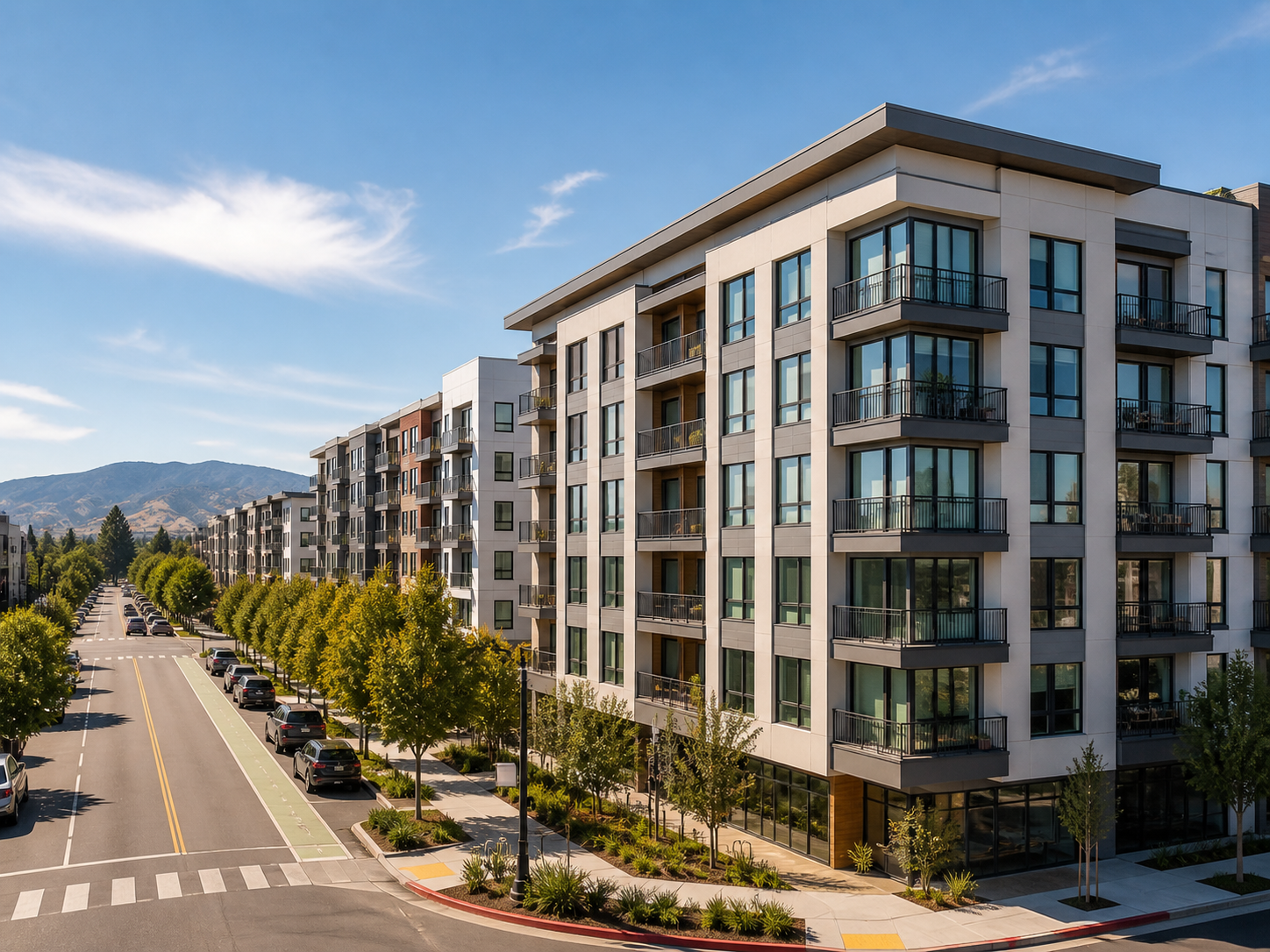
Mountain View is overhauling decades-old housing rules that have long stifled apartment development. For property owners along the city's major corridors, the window to act is opening — but the fine print could reshape the math on any redevelopment.
What you'll learn in this article
- Mountain View's City Council voted 5–1 on February 10, 2026 to scrap unit-per-acre caps across roughly half the city; the ordinance is targeted to take effect late spring 2026.
- The new rules shift to form-based standards — height, footprint, and street fit — making traditional apartment buildings financially viable again on key corridors.
- Capacity for 10,000–16,000 additional homes is concentrated in about 15 targeted growth areas, led by the California Street corridor at up to 110 units per acre.
- A companion rule still being drafted may require below-market-rate replacement units when redeveloping rent-controlled buildings — a major unknown for project economics.
- Not every R3 parcel benefits — some properties wedged near single-family streets may face stricter setbacks under the new rules than they had before.
Mountain View's apartment zoning just got its biggest shakeup in decades. On February 10, 2026, the City Council voted 5–1 to rewrite the rules that govern how — and how densely — you can build across roughly half the city. The ordinance isn't signed yet; late spring 2026 is the current target. But the Council has made its direction clear, and for anyone with skin in the local multifamily market, it's worth paying close attention.
What's actually changing
For decades, Mountain View's zoning rules for apartment buildings produced one thing above almost everything else: rowhouses. The old system capped units per acre so tightly that building a traditional apartment block simply didn't pencil for most developers.
The new system throws out those unit caps and instead focuses on how a building looks and fits its surroundings — its height, its footprint, how it meets the street. The practical effect: significantly larger and taller apartment buildings will be allowed in key parts of the city, particularly along major roads and near transit.
The city estimates the update could unlock capacity for 10,000 to 16,000 additional homes citywide over time. — City of Mountain View planning estimates
Where the opportunity is greatest
Not every block benefits equally. The biggest density increases are concentrated in about 15 specific areas the Council has targeted for growth. Based on the current planning direction, these are the corridors with the strongest redevelopment potential:
| Corridor | Why It Stands Out |
|---|---|
| California Street corridor | The only area in the city where up to 110 units per acre are allowed as a starting point. |
| Del Medio South / San Antonio Road | Close to Caltrain and the San Antonio shopping center, with larger parcels suited to bigger apartment projects. |
| Continental / Dale area | Near the Sunnyvale border, with existing large complexes and freeway adjacency that makes height less of a neighborhood concern. |
| Rengstorff Avenue | Already seeing active developer interest, with several large projects in the pipeline even before the new rules take effect. |
| Moffett Boulevard | Benefits from both the new apartment zoning and a separate program converting nearby lower-density land to allow apartments for the first time. |
The catch investors need to know about
There is one major unknown that could significantly affect the math on any redevelopment project: a new local rule currently being written alongside the zoning update.
If you demolish an existing rent-controlled apartment building to redevelop the site, you may be required to include an equivalent number of below-market-rate units in your new building. The city hasn't finalized this rule yet — but it could materially change the financial picture on any rent-controlled parcel you're considering.
Also worth noting: not all R3 properties benefit from the changes. Parcels squeezed between apartment zones and single-family streets may actually end up with stricter rules than before — particularly a new 20-foot front setback requirement that critics say limits how much of the lot can actually be built on.
Always confirm which new zoning category your specific parcel falls into before making any decisions. The ordinance language is still being finalized, and proximity to single-family streets, transit, or specific overlays can produce very different results on adjacent lots. Consult the city's zoning maps and an attorney familiar with Mountain View land use before relying on any preliminary read.
The bottom line
This is the largest restructuring of Mountain View's apartment rules in a generation, and it's set to reward owners along specific corridors while leaving other R3 parcels with less flexibility, not more. The corridor your property sits on — and how the still-pending rent-controlled replacement rule lands — will determine whether your lot becomes a meaningfully more valuable redevelopment site or stays roughly where it is.
If you own property in one of the high-growth corridors, now is the time to understand exactly where your parcel lands under the new framework.
Want to know what your Mountain View parcel is worth under the new rules?
Reach out for a free evaluation of your parcel — I'll walk you through which new zoning category it falls into, where it sits relative to the high-growth corridors, and whether the upzoning meaningfully changes its value.
Request Your Free Parcel Evaluation →
Real estate investor and contributing writer covering landlord strategies, local ordinances, and multi-unit property management for small to mid-size investors.